New Zealand trade mark
registration done right.
Smart guidance for a smooth process and better results.
Protect your brand with confidence in New Zealand
Because trade marks shouldn't be confusing or expensive. Marky is New Zealand based and takes the guesswork out of protecting your brand—no legal jargon, no inflated fees, just a clear step-by-step process built for real people. With smart checks, helpful guidance, and local expertise, Marky makes it easy to get your trade mark sorted, fast.
Why register a trade mark?
A trade mark registration is your brand's best protection. It's much stronger than company names, business names, or domain names - giving you exclusive rights, so others can’t legally use a similar name or logo.
Exclusive rights
Get exclusive rights to use your trade mark for your specific goods and services. No one else can legally use it without your permission.
Valuable asset
Your registered trade mark can be sold or licensed to others, creating additional revenue streams for your business.
Legal protection
Stop competitors from using similar marks and protect your reputation across New Zealand.
Real-world protection
Online protection:
If you sell toys under "RAINBOCORNS" and a competitor uses your name in their online marketing, such as in Google Ads, a registered trade mark lets you shut this down quickly.
Geographic expansion:
Own a successful car wash in Auckland? With a registered trade mark, you can stop someone in Wellington from using your business name - protecting your expansion plans and reputation.
Ready to protect your brand?
Get startedThe process... made simple
Simple steps to protect your brand - no legal jargon, just clear guidance
Easy trade mark choice
We guide you through the process to pick the right trade mark for your business.
Smart goods & services selection
We use the official IPONZ class list to ensure everything’s valid — and our clever AI helps you choose the right classes and services for your trade mark.
Ensure correct ownership
We help you file under the right legal entity — whether that’s you or your company — so your trade mark is properly protected.
The journey
What happens after you apply?
Filing same day
Marky files your application with the Trade Marks Office.
Examination
The Trade Marks Office reviews your application (currently about 4 months).
If accepted by the Trade Marks Office your application then gets published for 3 months. Others can oppose if they think they have prior rights (but oppositions are statistically unlikely).
If it's not initially accepted, Marky can explain exactly what's wrong and your options to fix it.
Registration
Congratulations! Your trade mark is officially registered for 10 years (and renewable beyond).
What to file
Distinctive
Not descriptive of your goods or services
Different
Not the same or similar to existing marks
Registrable
When is a trade mark distinctive?
Distinctive examples:
NIKE - Greek goddess of victory, not shoes
APPLE - Fruit, not phones
GOOGLE - What does that even mean?
The Challenge: These brands had to educate consumers and build recognition.
The Reward: Once established, distinctive brands are much easier to protect and enforce. It's also easier to make your brand stand out in a crowded market.
Not registrable examples:
LEGAL SERVICES NZ (describes legal services)
ELITE GARDENING (describes gardening services)
NUMBER ONE (everyone wants to be number one)
OJ (for orange juice)
BYO (for restaurants)
Why not? Other traders need these words too.
The Trade Marks Office won't give you exclusive rights to common industry language.
Your mark shouldn't describe what you sell or be something others in your industry would obviously want to use.
Words vs Logo: What to Register?
Choose the right type of trade mark application for your business
Word
Protects the words in your brand name, no matter how they’re styled or used — giving you the broadest protection.
Logo
Protects your specific design — the combination of colours, fonts, and graphics that make up your logo.
Combined
Covers the full logo and words together — a good fallback if the words alone aren’t distinctive enough to register.
Register your words if you can — it’s the strongest and most flexible protection. If that’s not possible, a combined mark may be the next best option. For more detail, see our FAQs.
Transparent pricing
Honest, upfront pricing for trade mark registration
One Class
- One class
- Smart class selection
- Application filing
- Progress updates
- Additional support available
Two Classes
- Two classes
- Smart class selection
- Application filing
- Progress updates
- Additional support available
Three Classes
- Three classes
- Smart class selection
- Application filing
- Progress updates
- Additional support available
Need more than 3 classes? Want a manual or legal review? Use our calculator
Pricing Calculator
All fees are +GST if applicable.
Frequently asked questions
Got questions? We've got answers.
A trade mark registration:
- gives you exclusive rights to use the trade mark for the goods and services you claim;
- can be sold or licensed to others (meaning you can grant others rights to use the trade mark); and
- can be enforced against others (meaning it can help to stop others using the same or similar trade mark for the same or similar goods or services).
Registered trade marks give much better rights than company names, business names and domain names, for example. Company names, business names and domain name registrations do not give you exclusive rights to the name and there is nothing stopping others from registering or using even very similar company names, business names and domain names. Only a trade mark can help with this.
If you generate a reputation in a trade mark (through extensive use/sales in connection with the trade mark) the business will accrue rights in that trade mark that can be enforced against others. These are called common law rights, or unregistered rights. However, registering a trade mark gives more formal recognition to the trade mark (regardless of reputation) and gives the owner many practical benefits over and above unregistered rights to a trade mark.
For example, say you sell toys under the name RAINBOCORNS and a competitor uses your trade mark as a Google Adword and displays RAINBOCORNS in the adtext when people search for your product by the name RAINBOCORNS. If you have a trade mark registration for RAINBOCORNS then you can use the Google complaint process to stop the competitor doing this. But if you do not have a trade mark registration then this situation would be much more difficult (and costly) to deal with. You can do similar things if someone misuses your brand on social media pages, or in a domain name.
Here is another example to explain the geographical benefits of a trade mark registration. Say you have a successful car washing business in Auckland and someone starts up another car washing business in Wellington under the same name. If you have a trade mark registration for your business name then you would have trade mark infringement grounds to stop them trading under the name. If you do not have a trade mark registration then you would need to prove that you have a reputation in the name such that people would think that the other business is your business, or that you are somehow connected (like a franchise), and this can be a difficult task. This could be a problem for you if you have plans to expand, or if the other business does poor work and this could reflect badly on your business.
In short, registering a trade mark gives you an asset and stronger rights than an unregistered trade mark, and company names and domain names. It is usually a straightforward process to register a trade mark (assuming it qualifies as a trade mark and is not similar to other trade marks) and well worth your while.
Company names and domain names don’t give you the exclusive rights that trade mark registrations give you. Having a company name or domain name won’t allow you stop others using the same or similar company name or domain name, or trading name.
Also, through the company name and domain name registration process the name you choose is not compared to other trade mark rights. So, even though you have secured the name, you may not be able to use if someone else has trade mark rights in that name or similar. When you file a trade mark application it is compared to other trade mark rights already on the Trade Marks Register.
The main steps for the application are choosing the trade mark to file for, the goods and services that describe your business or offering, and the owner of the trade mark. MARKY helps to guide you through this process to make it as easy as possible, and to help you to make the right choices to get the best scope of protection you can.
Once the application is filed, the Trade Marks Office will examine it. This is to make sure your trade mark is distinctive enough for registration (read more here for what makes a distinctive trade mark) and not similar to other trade mark registrations. The examination process currently takes about 4 months. MARKY will let you know when your trade mark application has been examined by the Trade Marks Office.
If your trade mark application is refused by the Trade Marks Office MARKY will let you know about this and can let you know the options. If there are legal considerations, then MARKY can pass it on to our partners at LOFT LEGAL to help.
If your application has passed the test with the Trade Marks Office, the acceptance will be published and others will have 3 months to oppose it if they think they have rights to do so (oppositions are rare but can happen). See LINK for information about what happens if your trade mark application is opposed.
Once the opposition period has ended your trade mark application will be “registered”.
Trade mark registrations last for 10 years and can be renewed for successive 10 year periods.
MARKY helps you to file your trade mark by yourself, but guiding you through the process to help you get the best form of protection possible, guiding you to file for the best form of trade mark and the correct owner.
One of the best things about MARKY is the goods and services selection process. You type in what goods or services you provide and MARKY suggests appropriate wording. This is based on what you describe, but tailored to fall under specific wording the Trade Marks Office requires for registration, using
MARKY also has optional extras throughout the process to give you even more assurances, or if issues arise during the process, or if you just need more help.
Please see our pricing and use our calculator, here.
Usually both is a good idea.
Trade mark registrations for words alone (without stylisation or in logo form) generally give the broadest scope of protection, and future proof if you want to change your logo later.
Sometimes protecting words alone is not possible, for example if the words are descriptive of your offering (see LINK for more detail). In this case you may still be able to protect your logo, if it is sufficiently distinctive.
Either way, MARKY suggests filing for your logo as well as in the plain word format.
You may also want to protect icons in your logo separately, for example if you use the icon as favicon. You can do this with MARKY as well.
Generally speaking, the more trade mark registrations you have in your tool box the more you have to work with if issues arise, and each trade mark “tool” works in different ways.
For example, LOFT LEGAL uses this logo:
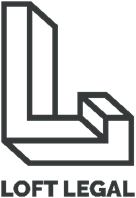
There are three main trade marks here:
LOFT LEGAL

and
For trade mark applications, LOFT LEGAL would be the priority. But the stylised LL icon is also protectable, as is the full logo.
Through the process MARKY helps you:
- choose your trade mark to file;
- select your goods and services (which we guarantee will be accepted); and
- enter the correct owner,
all of which are very important things. If you want to make sure your trade mark does not conflict with others, MARKY can facilitate searches for you for peace of mind – you just need to select this option at the end of the process and MARKY will sort this for you (this will be done before the trade mark is filed in case any issues come up from the searches).
MARKY can organise trade mark searches for you for your peace of mind.
But if you want to do it yourself you should check:
- the Trade Marks Register;
- ONECheck; and
- other online resources, like general searches of the internet.
For searches of the Trade Marks Register you can do a “Trade Mark Check” or “Trade Mark Case Search”. Both tools can be found here, with an explanation: https://www.iponz.govt.nz/get-ip/trade-marks/search/
Be aware that the “Trade Mark Check” usually shows lots of trade marks, including those that might have goods or services that do not conflict with yours and so might not be an issue.
With the “Trade Mark Case Search” you can limit to relevant goods and services, and you can also search for different spellings or variations that might be similar. This is more complicated than the “Trade Mark Check” but more refined and useful if you can get it right. Information about this is provided in the link above.
The ONECheck tool will tell you if you proposed trade mark is available as a business name (compared with other company name registrations in NZ), web domain (.co.nz., .nz and .com) and social media username (for Instagram, Facebook and YouTube).
It also checks the “originality” of your proposed trade mark using the “Trade Mark Check” mentioned above. But bear in mind it does not know what your goods or services are and this is not a very accurate assessment in isolation.
If this is looking all too hard (you are not alone), MARKY will be happy to sort it for you.
Trade mark registrations must be owned by legal entities, usually companies or individuals.
The owner of a trade mark should be the person or entity that uses the trade mark (or the person or entity that licenses use of the trade mark).
If you have a company then usually it is best for the company to own the trade mark.
Filing in the correct name is important because if the trade mark is not used by the recorded owner, or under their control, the registration could be vulnerable to challenge, including revocation for non-use.
Contact MARKY if you would like advice on ownership of your trade mark.
Marky will let you know if your trade is refused and the reasons for this, and can provide advice on what you may be able to do to get your trade mark application accepted. Where there are legal considerations involved MARKY can pass this on to our partner, LOFT LEGAL, to assess.
You can only use the ® symbol with your trade mark when it is actually registered. But you can use the TM symbol anytime. Lots of businesses prefer to use the TM symbol especially when they may be selling goods or services in countries where they have not yet registered their trade mark.
You can use your trade mark at any time, as long as it is not similar to someone else’s trade mark for similar goods or services. Searches help to assess this risk.
No – you only get protection in NZ. MARKY can help with trade mark applications outside of NZ too – contact MARKY to find out more.
If the trade mark application you file in NZ is the first application you have done for this trade mark then you can file overseas in the following 6 months and get priority from your NZ application. This means that if someone else tries to register or starts using the same trade mark in another country after you have filed in NZ then you will be able to trump them if you file I that country in the 6 month period. This is a good way to stagger costs if you want to see how your product goes in the market before committing to a trade mark application overseas.
These kinds of letters can be scary, but often there is a solution. MARKY partners with LOFT LEGAL to help you with this kind of thing – assessing your position and rights and either defending the claims against you or looking for a solution to resolve the matter as best as possible
MARKY refers these kinds of things to our legal partner, LOFT LEGAL. LOFT LEGAL can let you know your rights and suggest what to do.
Trade marks rights are country (or jurisdiction) specific. So, for example, if someone uses the same trade mark in the USA then they will generally not have rights to stop you using the same trade mark in NZ (unless they have a trade mark registration in NZ or they are trading in NZ or are otherwise well known in NZ).
Likewise, if you only have trade mark rights in NZ you are unlikely to be able to stop others registering or using your same trade mark in other countries.
Our partner LOFT LEGAL can help you with this.
Trade mark registrations are refined to the goods or services specified under the trade mark registration. For example, it would be difficult to use our trade mark registration for MARKY covering trade mark registration services to stop someone registering or using MARKY in connection with cleaning chemicals.
Sometimes goods and services in different classes can be considered similar. For example, beer in class 32 is considered similar to wine in class 33. They are different products but sold to similar markets for similar purposes.
Trade marks are for brands, like your business name, product name or logo. A trade mark registration gives you exclusive rights to use the trade marks for the goods and services you protect. For example, if you protect your product name with a trade mark registration and someone uses your product name in Google Ad text that appears when someone searches for your product, then you can use your trade mark registration and file a complaint with Google to stop that. Or if someone uses your business name in a domain name then you may be able to stop that.
Copyright protects visual representations, for example written publications or text on your website, or design drawings you do. Copyright is automatically created when the work is created, assuming it is original. You do not need to register copyright to have this protection.
Patents protect inventions, usually methods or processes for doing something, like creation of a new drug that cures something.
We refer to trade marks (two words). Trademarks (one word) is the American way of spelling, and many other countries have adopted this way. But we, like most Anglo-Saxon countries, use trade marks.
When filing a trade mark you need to have an intention to use it, if you are not using it already. When a NZ trade mark has been registered for 3 years it becomes vulnerable to revocation for non-use, if you stop using it or have not got around to using it yet.
“Using” a trade mark generally requires public disclosure of the trade mark, usually promoting and making sales of the goods or services you have protected.
If that 3 year period is coming up and you have not been using the trade mark (for example you have not yet made sales of your goods or services) and you do not have plans to start before that 3 year period is up, it is a good idea to file a new trade mark application to protect the intentions you still have for the trade mark.
Get in touch
Have questions about trade mark registration?
We're New Zealand based and here to help guide you through the process.
Prefer email? [email protected]